This site uses cookies for analytics and to improve your experience. By clicking Accept, you consent to our use of cookies. Learn more in our privacy policy.
The Global Wellness Summit (GWS) and leading industry research highlight key developments shaping the wellness economy in 2025.
Global Wellness Market
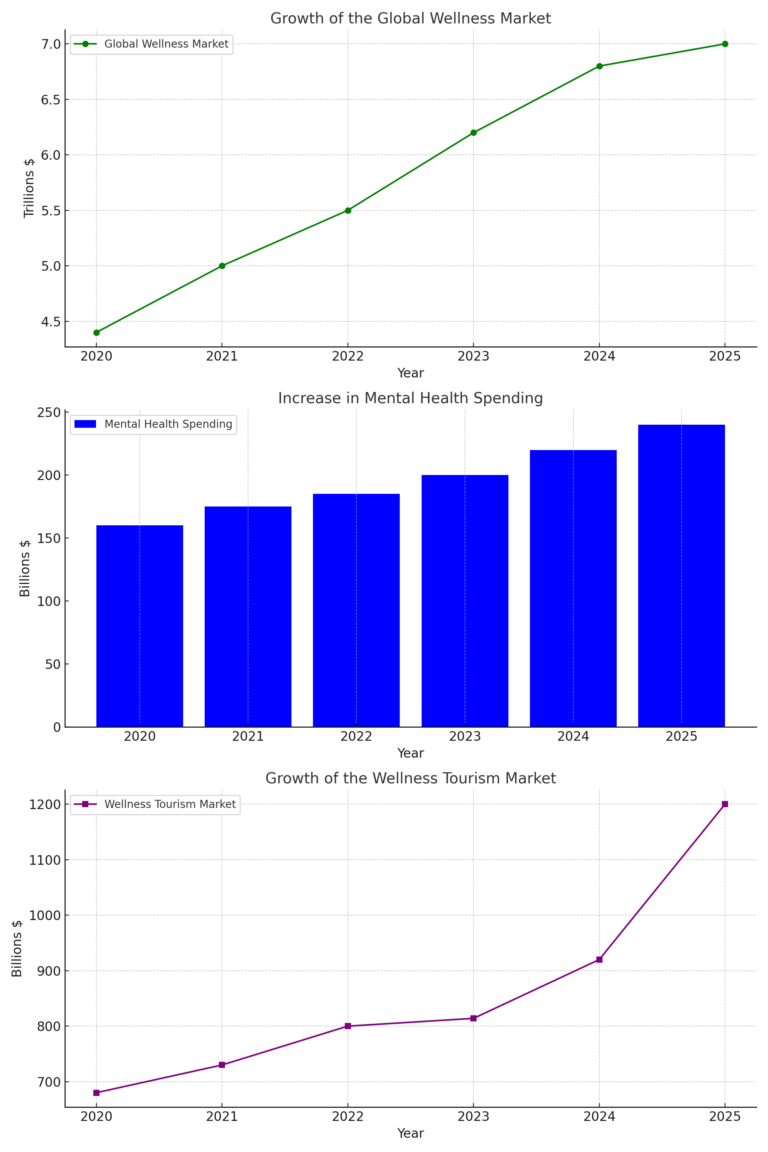
Overall market volume: The global wellness industry is projected to exceed $7.2 trillion by 2025, up from $4.4 trillion in 2020 (CAGR ~9–10%).
Key segments:
Personal Care & Beauty – $1.2 trillion+
Fitness and Physical Activity – approximately $1.6 trillion by 2025
Mental Wellness & Digital Platforms – growing at 15–18% annually
Wellness Tourism – strong recovery with 18–20% annual growth
Technology in Wellness
Wearables: The global wearable technology market is projected to exceed $180 billion by 2028 (14–15% annual growth), including smartwatches, fitness trackers, and emerging smart rings.
AI Technologies: AI-driven personalization platforms are increasing engagement in digital wellness programs by 30–50%, enabling tailored health, nutrition, and mental wellness solutions.
Leading apps such as Calm and Headspace have surpassed 120 million downloads, reflecting strong global demand for stress management and mental health support.
Mental Health & Emotional Well-being
Global spending on mental wellness has surpassed $240 billion, continuing to grow rapidly.
Corporate Wellness: Over 90% of medium and large companies are increasing investments in employee mental health, resilience programs, and burnout prevention initiatives.
Wellness Tourism
Market volume: Expected to approach $1.3 trillion by 2025.
Functional Foods: The market is projected to reach $350+ billion by 2025, with CAGR around 9–10%, driven by demand for immune support, longevity, and performance nutrition.
Nutraceutical Market: The global market exceeds $520 billion in 2025, with strong focus on:
cognitive health (brain supplements)
probiotics and gut health
adaptogens and stress resilience
Corporate Initiatives
Company wellness budgets: Average spending per employee has increased to $400–600 per year, covering mental health, nutrition, and preventive health programs.
Hybrid wellness programs: Online and offline formats continue to expand, showing 20%+ annual growth, reflecting flexibility and scalability.
Environmental Sustainability in Wellness
Sustainable beauty: Over 80% of brands are transitioning to eco-friendly packaging, clean ingredients, and transparent sourcing.
Plant-based movement: Demand for plant-based products and vegan cosmetics continues to grow, with 30–35% increase over recent years.
Environmental Sustainability in Wellness
Sustainable beauty: Over 80% of brands are transitioning to eco-friendly packaging, clean ingredients, and transparent sourcing.
Plant-based movement: Demand for plant-based products and vegan cosmetics continues to grow, with 30–35% increase over recent years.